


No products in the cart.
Return To Shop
Annika Urm: How much and how do I follow a keto and low carb diet?
As an international journalist and keto and low carb nutrition guide, I travel a lot and very often people ask me if keto and low carb diets are sustainable in the long term and how I follow them. My answer is simple – I have been living it for the last 7-8 years. During that time, it has not been a diet for me, but a constantly evolving lifestyle that I have learned to adapt to the season, how I feel, exercise, workload, knowledge, experience and what my body needs at the moment.
Annika Urm : How much and how do I follow a keto and low carb diet? I will answer in detail:
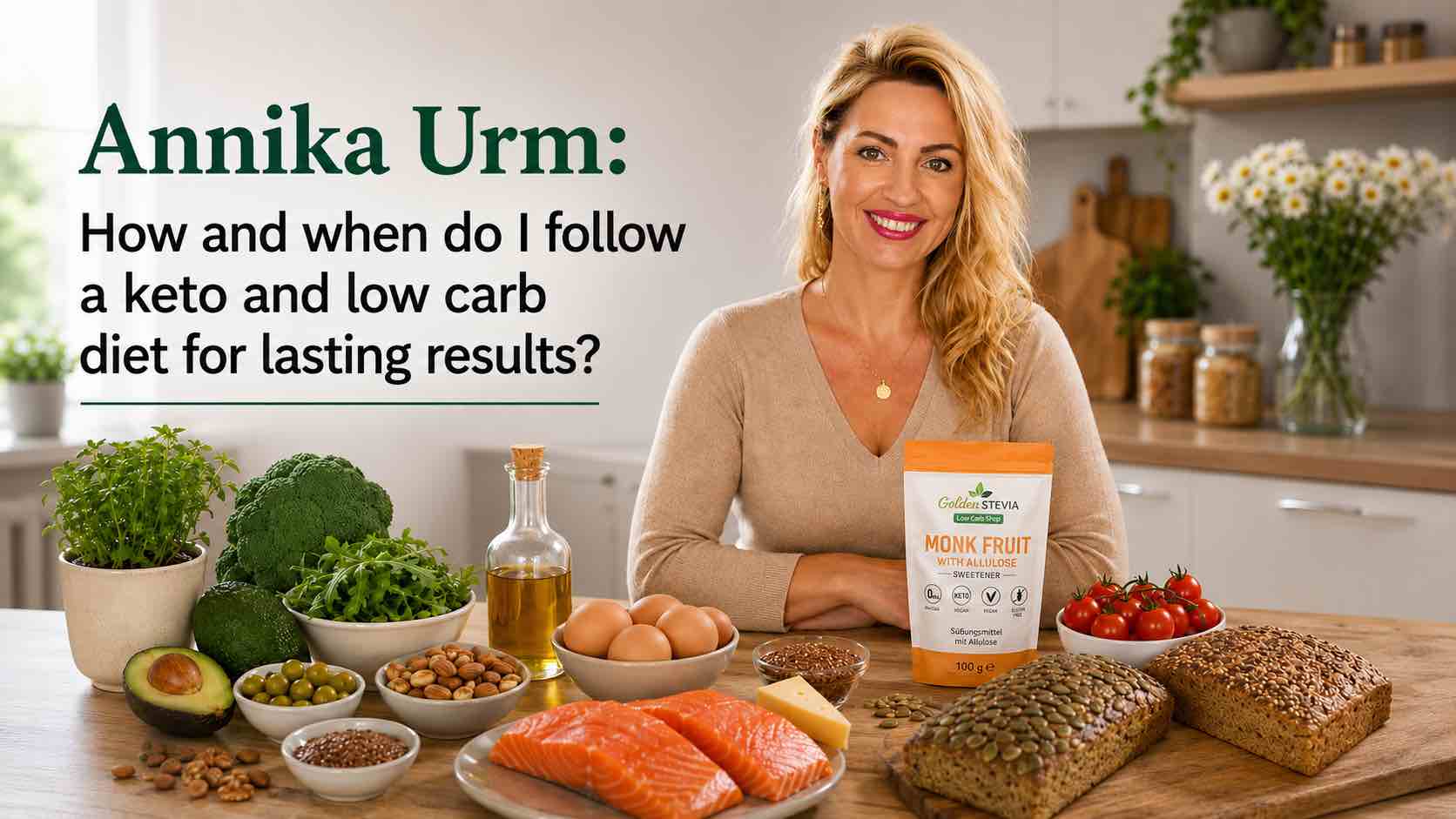
Today, I have developed a fairly natural rhythm. I eat very low-carb food for about 5–6 months a year. In Estonia, it is easiest to do this from November to May, because then it is not the time for fresh seasonal food. After summer berries, apples and autumn pumpkin, I no longer crave fresh seasonal food in the winter. Then it is easy to move back to a stronger keto and low carb rhythm.
My diet is more relaxed in the summer. During the summer season, I eat everything fresh that nature currently provides — from berries to potatoes. At the same time, I continue with my keto and sugar-free staple foods in the summer. Keto desserts, keto breads, sugar-free jams, cakes, breads and pastries are in my life year-round. I make jams with Monk Fruit and Stevia, bake my breads and cakes from low-carb mixes, and I see no reason to give up these foods that support my body.
This doesn’t mean I’m giving up on my principles in the summer. Rather, it means that metabolic flexibility is important to me. Keto is a tool that I can use to manage my blood sugar, hormone signals, appetite, energy, weight, mood, and metabolism.
Annika Urm “A keto diet is always a low-carb diet, but a low-carb diet is not always keto.”
A keto diet is always a low carb diet, but a low carb diet is not always keto. This is a very important difference that is often not understood. For me, the practical distinction starts with how many carbohydrates a particular food contains per 100 grams.
A ketogenic diet is one step further from a low carb diet. A low carb diet is very convenient and I practice it more, but I have also often been in ketosis. I recognize this myself, it is easy to be and my appetite has disappeared, in addition, I check by measuring ketone bodies in the blood.
For a ketogenic diet, there should be about 5 grams of carbohydrates per 100 grams. This is the practical limit of a keto diet for me. The daily amount of carbohydrates for a ketogenic diet usually remains around 5–40 grams, depending on the person, goal and metabolism.
For a low carb or low carbohydrate diet, there should be about 10 grams of carbohydrates per 100 grams. The daily amount of carbohydrates for a low-carb diet can be approximately 40–130 grams. The numbers vary slightly from source to source, but the practical idea remains the same: keto is stricter, low carb is more flexible. The keto diet often restricts certain nutrients, but I generally don’t do this because I know I’m in ketosis anyway and it doesn’t affect my body. Yes, things are stricter at first, but as you get to know your body, everything will “fall into place” smoothly, exactly as it suits your lifestyle.
Annika Urm : “It is very important for me that each meal contains few carbohydrates. Not that I eat chicken and regular bread with it, but if I eat bread, it must be keto or low carb bread. The same applies to desserts, pastries, jams, cakes, pancakes, breads and snacks. For me, a sustainable keto and low carb lifestyle only occurs when everyday foods themselves do not provide too much carbohydrate load at once.”
Therefore, pasta, regular bread, rice, bread, sugar or even dried fruit are not everyday low-carb foods for me. These foods quickly increase appetite, can cause a sharp increase in blood sugar or spikes and create an unstable blood sugar environment. This often leads to the next sugary snack, because the body quickly wants new energy.
When you eat low-carb foods consistently, you feel different. In my experience, hunger becomes calmer, cravings decrease, and the body no longer demands another bite all the time. The longer you have been practicing a low-carb diet, the faster your body can return to ketosis. At first, it was harder for me and took about five days. Now, I usually get back to ketosis in 2–3 days if necessary.
“When I first entered ketosis, my head was spinning and my body was hot. It felt like my health was out of order. But it was a sign – a new program was starting in my body. This dizziness and heat disappeared in a day or two. Later, these symptoms recurred, but always weaker and disappeared completely. I already thought that I had eaten something wrong, but by constantly measuring my keto bodies, I received confirmation that I was on the right track – my body was 100% in the new program without any side effects. With today’s 8 years of experience, I can confirm that I would not trade this Keto and low carb diet for any other diet. I have tried many different diets in my life, but I do not know or have heard of a simpler and healthier diet, and on a soul level, it is the best for me.” – Veiko Huuse (international trainer, spiritual guide, author of books, creator and editor of the international new society news channel Fonte.News)
My goal is not just to lose weight. The most important thing for me is to create a lifestyle that will support metabolic health for years to come. I want to support hormone signaling, keep blood sugar stable, maintain muscle mass, and strengthen my body so that it can carry me into old age.
Annika Urm : “For me, muscles are the fountain of youth, an internal pharmacy, and one of the most important health assets.”
The older you get, the more important it is to maintain muscle mass at all costs – Protect your muscle mass like it’s your life. Muscle mass and muscle strength determine a lot about what your life will be like in the last ten years. Can you get up from a chair by yourself? Are you standing firmly? Can you walk by yourself or do you need support? Do you have the strength to serve yourself? These are not small questions. These are quality of life questions.
However, today’s modern diets often lose weight at the expense of muscle mass and quickly gain it back at the expense of fat, the same is true with Ozempic.
For me, the amount of protein and fat is very important in keto and low carb diets. I should ideally consume about 120 grams of protein per day and about 100 grams of good fats. By good fats, I mean, for example, butter, coconut fat, beef fat, olive oil, nuts, avocado, egg yolk and cheese.
You should eat about 1.6–2 grams of protein per kilogram of your ideal weight. For many people, this means about 100-120 grams of protein per day. Eating that much is not as easy as it seems. Anyone who has actually tried to eat enough meat, eggs, fish, or other high-quality protein knows that you get full very quickly.
Annika Urm : “My own experience is that if I have a plate full of meat or eggs on the table, I try to eat it quite quickly, in about 5–7 minutes. After that, the satiety signals reach the brain and the food is no longer simply eaten. Protein-rich food gives the body a strong signal that it has had enough. You don’t get that feeling with carbohydrates.”
However, this knowledge can also be used the other way around. If a person needs to increase their appetite, for example if they eat too little or are very weak, then carbohydrates can increase their appetite. Sometimes this can have practical value, especially in geriatrics, when an elderly person eats almost nothing. In this case, the question is not about weight loss, but about how to get a person to eat in the first place.
It is also important to understand the goal with fats. My personal experience is that fat is particularly good at controlling hunger, especially when a person first switches to a keto diet. At first, I was very hungry and fatty sweets saved me. Fat fueled the body while it was still learning to use fat better than carbs.
I have also noticed that if I start my day with a fat-burning coffee or water with olive oil, lemon, and apple cider vinegar, my body goes into fat burning mode faster. I have also linked this to the increase in ketones that I have measured. This is my practical experience, not a claim that everyone has to do exactly the same.
On the other hand, it is important to understand that if a person is already in ketosis, hunger has decreased, and the goal is to lose weight, then you do not need to add fat all the time. The fuel for ketones is fat, but this fat can come either from food or from the person’s own body reserves. If the goal is to make your body a fat-burning machine, then the amount of fat you add should be adjusted reasonably. This limit is different for each person.
It is also worth remembering simple energy logic here. Fat provides 9 kcal per gram, proteins and carbohydrates provide about 4 kcal per gram. Therefore, it is very easy to overeat energy with fat, even if the food is “correct” in terms of carbohydrates. Keto does not mean that you can eat unlimited amounts of fat. In the beginning, fat can help with the transition and control hunger, but later it must be adjusted according to the goal. Fat must also be the right source, rapeseed oil and fried chicken wings do not improve your cell metabolism but keep them in a constant low inflammation and this is even more dangerous, that is why french fries and chicken wings are very toxic foods, there is nothing useful in them for you anymore.
Protein is a different story. If someone can eat very large amounts of protein, the body can, under certain conditions, convert some of it into carbohydrates. But in normal life this is not the main problem for most people. A much more common problem is that people eat too little quality protein and lose muscle mass over time.
The body can produce the necessary amount of carbohydrates itself through a process of glucose called gluconeogenesis. This means that the body does not have to get all the glucose/carbohydrates from food. Carbohydrates are not essential like essential amino acids and fatty acids. Essential amino acids, for example, are vital for humans. The word “essential” itself says that the body cannot function normally without them.
One of the main mistakes that people make when starting keto is that they start with only eggs, bacon and avocado. At first it seems easy, but after two weeks they feel bad and want to throw this food against the wall. The problem is not that keto does not work. The problem is that people lack a system, recipes, alternatives to their favorite foods and preparation.
Many people think that they have to give up bread, sweets, pastries, cakes, pancakes and everything they like. But in fact, you don’t have to give up delicious food. You have to change the composition. That’s why I created a sugar-free world, keto and low carb baking mixes, recipes, desserts and alternatives, so that a person doesn’t have to live in a diet prison. They have to be able to live a real life.
For me, the key to sustainability is preparation, preparation and more preparation. If you don’t have the right bread, the right sweet, the right flour, the right breakfast and the right snacks at home, then you’re broke. Not because you don’t have the willpower, but because the environment doesn’t support you. Often there’s also no knowledge, but if you’re already reading this article, then you know where to get this information.
That’s why I’ve always said that first you need to create the right environment. If you have sugar, bread, cookies, plain chocolate and macarons at home, then there’s no point in talking about willpower. A person is a biological being, not a machine. If your blood sugar fluctuates, your stress is high, you’re sleeping poorly and you’re surrounded by only fast carbohydrates, then slogans won’t help. The system will.
The same goes for sugar. Not all people are able to simply “decide” to give up sugar. Sugar-related cravings are physiological, not just psychological. That’s why I’ve also written a separate story about why people can’t give up sugar and why the solution isn’t just willpower, but also tidying up your body, brain, environment and food choices.
It’s important to be honest that I’ve also slipped up from time to time. There have been periods where I’ve been back to regular food for 2–3 weeks. This happens when traveling, visiting, staying in a foreign place for a long time, or in a situation where it’s not easy to get the keto and low carb food you need. Then you notice in a few weeks that it’s hard to be, your pants are tight, a bone or knee starts to hurt somewhere, maybe you forgot to take collagen with you or drink water with mineral salt. The body recognizes it immediately.
Click the link and you will learn how important it is to eat collagen and drink sea salt water every day:
And then you know you have to get back to eating right. Within a few days, you’ll start to feel better. That’s the biggest value of the keto and low-carb lifestyle for me — I don’t have to start from scratch. I have a system. I know what to do. I know which foods support me and which foods quickly throw me off balance.
I’m often asked if keto is sustainable in the long term. My answer is: yes, it can be, but only if it’s not built on suffering. If keto means only eggs, bacon, and denial to you, then it won’t last. But if keto means a new world of favorite foods to you, where you have bread, cakes, sweets, breakfast, real food, enough protein, good fats, and stable blood sugar, then it can become a happy way of life.
One of the most common criticisms of the ketogenic diet is that it can only be followed for a few months. It is believed that sooner or later, restricting carbohydrates becomes too difficult and a person returns to old habits. I think it is not just about the amount of carbohydrates. The question is whether a person creates a new world for themselves or simply tries to forbid something within the old world.
Keto-Mojo published a case study of a person who had been living a ketogenic lifestyle for almost 15 years. The most interesting thing about this story was not just how long he maintained ketosis, but how he managed to do it. He did not view keto as a temporary diet. The goal was not to lose weight quickly, but to develop a lifestyle that would support metabolic health for years to come.
During this time, he regularly monitored both his blood sugar and ketone levels. This allowed him to see how his body responded to different foods and make decisions based on his own metabolism, not just general recommendations. This is a very important mindset for me too. A person needs to learn to read their body — not just calories or weight, but blood sugar, hunger, energy, sleep, muscle strength, recovery, and how they feel.
This case study also described a person who occasionally consciously ate more carbohydrates, but returned to ketosis within a few days. The authors associated this with good fat adaptation and metabolic flexibility. This concept is very important. A metabolically flexible body does not constantly depend on one energy source. It can use both glucose and fat when needed. My own experience is very similar.
Longer-term clinical studies also support the same trend. For example, in a 2-year study by Virta Health, people who followed a ketogenic diet saw improvements in several markers of metabolic health, including long-term blood sugar, triglycerides, and HDL cholesterol. A significant proportion of participants continued on the same diet at the end of the study. This doesn’t mean that keto is for everyone or that it’s the only right way to eat, but it does show that the statement “keto is not sustainable” doesn’t hold true for everyone.
Annika Urm: “My own story is a practical example of all this. I haven’t been on keto for three months. I’ve lived in this world for 7-8 years. I’ve seen what works in the first month, what works in the first year, and what works when you’ve been doing it for years. I’ve seen how appetites change, how the body learns to return to ketosis faster, how summer can be more relaxed and winter stricter, how rhythm can be lost when traveling and how it can be regained in a few days.”
Annika Urm: “But my story is not just that I eat keto or low carb food. My story is that I have created an entire sugar-free and low carb world so that this lifestyle is truly sustainable. I have created recipes, written books, developed baking mixes, sugar-free desserts, keto breads, and low carb alternatives just so that people don’t have to give up their favorite foods, but can change their composition.”
My goal has never been to sell just one product. My goal has been to create an environment where healthy choices are easier than old habits. When a person has the right products, recipes, knowledge and a practical system, they don’t have to survive every day by willpower alone. They can simply live differently.
That’s why I’ve created Golden Stevia bread mixes and other sugar-free, gluten-free, GMO-free and low-carb products. These are not just products for me. They are part of a system that helps a person stay on the chosen path without having to give up bread, pastries, cakes, pancakes or a sweet life.
After the age of 40, you can no longer continue with the same diet indefinitely and hope that your body will cope with everything. If you have lived your whole life in the midst of constant carbohydrate loads, blood sugar fluctuations, inflammation and oxidative stress, at some point your body will start to take its toll. When you are younger, your body can compensate a lot, but at the age of 40+, your hormones change, muscle mass decreases more easily, recovery slows down and your brain’s energy needs become especially important. You can no longer “get by” with the same food that worked when you were 25. Something has to change. For me, keto and low carb are exactly the tool you need to reduce your carbohydrate load, support the use of ketones as an energy source, keep your blood sugar more stable and give your body a new opportunity to work with better energy. A young body compensates for years of bad habits. As you get older, this reserve becomes smaller and smaller, and the body finally starts to show the bill for the choices accumulated over the years.
In my opinion, many people live only half of their true potential when they are young. They are used to fatigue, brain fog, constant cravings, and mediocre energy, and they think it’s normal. If a person has never experienced what it means to have stable energy, good focus, and fast recovery, they don’t know how to miss it. They settle for feeling mediocre because they don’t know that their body could be functioning at a completely different level.
Long-term success is not determined by the amount of carbs on their plate. Just as important are quality food, adequate protein, good fats, sleep, exercise, strength training, stress management, minerals, fluid balance, and a willingness to adjust their diet to their body’s needs.
The most important question is not whether you can stick to two weeks of strict dieting. The most important question is what kind of diet will help you maintain good health, stable metabolism, strength, and healthier labs in ten years.
The low carb and keto world I have created is not a finished or final system. It evolves with science, practical experience, and new knowledge. Every new study, every new recipe, and every person I have helped over the years teaches me something new. My own diet has also changed over that time. One thing has not changed, however – my desire to help people build a food world that doesn’t last two weeks, but can support health for a lifetime.
I have also written several articles about how sugar is not just a sweet taste, but a biological influencer. Sugar affects blood sugar, insulin, appetite, the brain’s reward system, and a person’s daily choices. If a person lives in an environment where sugar is available all the time, then we cannot talk about free will alone.
If food makes you sick, tired, inflamed, hungry and addicted, then it is not your best medicine. Real food that comes from the farm, garden, forest, sea, animal, chicken and your own kitchen is a completely different matter. I have written about this principle in detail in the article “Food is your best medicine”. By food I mean really clean food in harmony with nature.
It is never too late to turn to Mother Nature and eat real food. The important thing is will and love for yourself.
Feel free to write to me if you want guidance: info@goldenstevia.com
Annika Urm
Who is Annika Urm?
Annika Urm is an international journalist and an international financial manager with a master’s degree in accounting and financial management, whose background in accounting and financial management has shaped her deep understanding of the logic of balance and equilibrium. During her studies in Medical Nursing, she found that the human body operates on the same principle as a financial balance: health does not depend on individual indicators, but on whether the system as a whole is in balance.
Annika’s focus is on the human body as a whole, where fluid balance, electrolytes, acid-base balance, vitamins, minerals, hormones and metabolism play a decisive role. Annika approaches health systematically – looking at both the tests and the person behind them, always asking what is missing in the body, what is in excess and how to restore balance.
This way of thinking is especially clear in intensive care, where the patient cannot speak and decisions are made based on physiology, tests and clinical logic. For Annika, this is not an exceptional situation, but a reflection of the fact that everyone’s health ultimately comes down to the same principle – the body’s balance.
When restoring balance, she also considers the regulation of the nervous system and metabolism to be important, where sleep, physical activity (especially strength training), following the circadian rhythm, and alternating cold and hot as physiological signals that teach the body to adapt and recover play a central role. In her opinion, these are not “lifestyle tips”, but part of the body’s biological regulation and health maintenance mechanisms.
In addition to nursing, Annika works with the ketogenic diet as one possible tool in supporting metabolic balance, but her central interest and passion has always been one: human health and the body’s ability to recover when the balance is in place.
Read more about Annika Urm here:
AU News today https://news.annikaurm.com/
Annika Urm https://annikaurm.com/
Annika Urm – your guide to a healthy lifestyle
Annika is the creator of the Golden Stevia brand and recipes, the author of recipe books and a keto and low carb diet nutritionist, specializing in low carb, keto and diabetes-friendly nutrition. Her approach combines science-based nutrition, practical living and natural balance. A sweet life without sugar is possible – starting with simple steps All products and
services: https://goldenstevia.com If you want a personal consultation and have a sincere desire to get healthy – for example, to reverse type 2 diabetes or lose weight with a keto diet – then your trusted guide is nutritionist Annika Urm.
Read more:
What is keto and low carb diet:
https://goldenstevia.com/what-is-keto-diet-lchf
Golden Stevia products are available throughout Europe:
 Golden Stevia Shop Is Now Available in English!
My name is Annika Urm, founder of the Golden Stevia Keto & Low Carb Shop.
We are not a large corporation or an anonymous marketplace seller. We are a family business that has been helping people reduce sugar, follow a keto or low-carb lifestyle, and find suitable products for diabetics for many years.
In our shop you will find:
 Natural sweeteners: Monk Fruit, Stevia, Erythritol and Inulin
Guérande sea salt with naturally occurring mineral
Collagen and food-grade gelatine
24 Keto & Low Carb baking mixes
Keto muesli
Sugar-free and gluten-free products
Every product is personally selected by us and used in our daily lives.
If you have any questions, you can contact me directly.

My name is Annika Urm, and I started www.goldenstevia.com low carb shop to help to find easy all sugar-free, gluten-free and keto and diabetic-friendly products, cooking ingredients, tasty and healthy sweeteners in one store. I created Keto Low Carb Baking mixes to make your life easier and show that you don’t have to give up your favourite food to enjoy low-carb life.

About author

Related posts

Collagen, gelatin and Guérande sea salt minerals for daily hydration, skin, joints, hair, nails and recovery... Continue reading
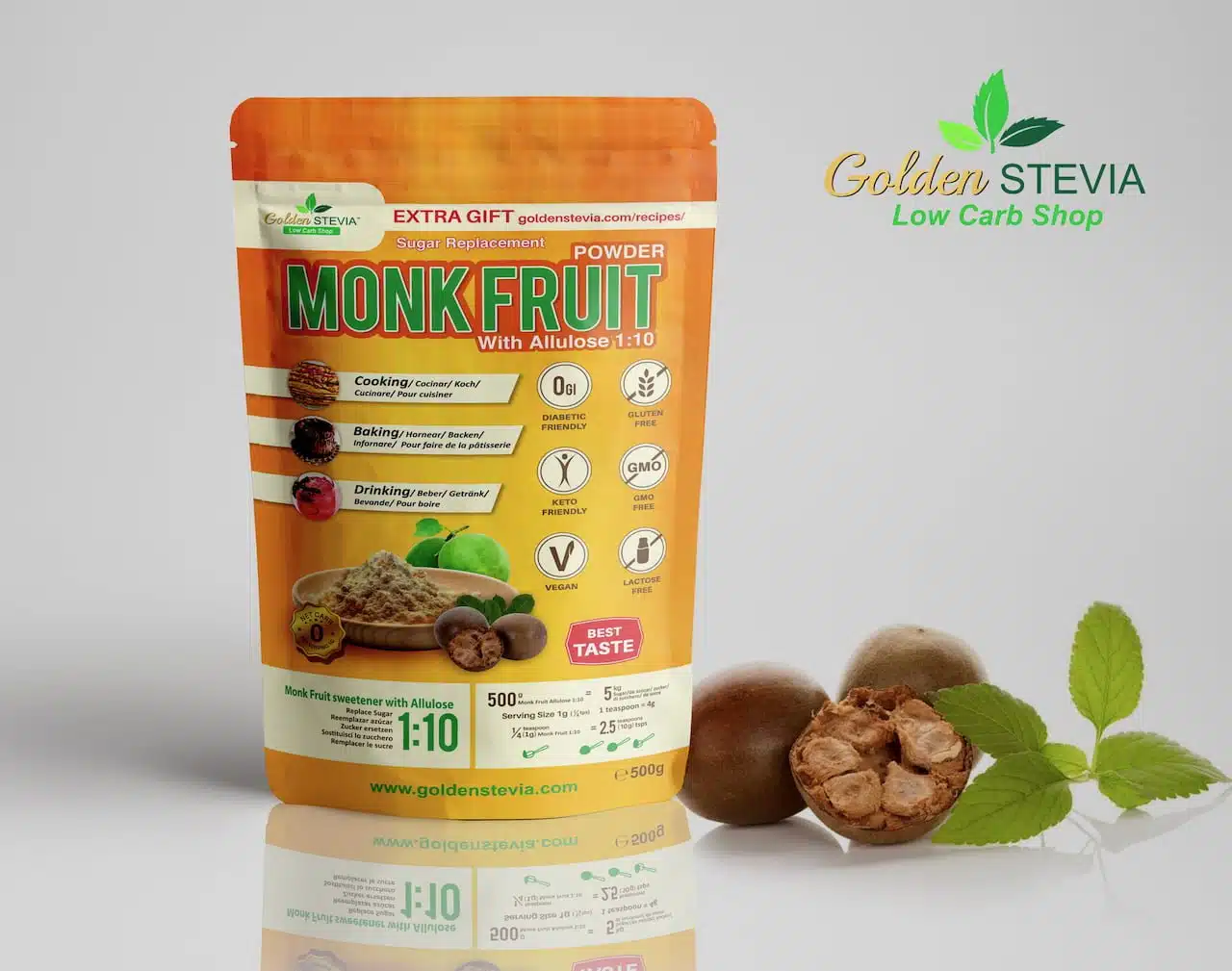
What is Monkfruit sweetener, sugar substitute? Continue reading

How to use Golden Stevia sweetener in your coffee and food? You only use it 0.5... Continue reading

What is the Keto diet LCHF (Low Carb High Fat) or ketogenic diet? Qu'est-ce que le... Continue reading